Singer Heavy Duty 4423 Manual: A Comprehensive Guide
This guide offers detailed instructions for the Singer 4423, 4432, and 5523 models, including safety precautions, component explanations, and troubleshooting tips.
Access the PDF manual for external parts removal, setup, basic & advanced sewing, maintenance, and Argos product support (460/2394) information.
The Singer 4423 Heavy Duty sewing machine is engineered for durability and power, making it a popular choice for both beginners and experienced sewists. This machine excels at handling a wide range of fabrics, from lightweight cotton to heavy-duty denim, and is capable of tackling various projects, including quilting, garment construction, and home décor.
This comprehensive guide serves as a resource for understanding and maximizing the capabilities of your Singer 4423. It provides step-by-step instructions, safety guidelines, and troubleshooting advice to ensure a smooth and enjoyable sewing experience. Whether you’re a novice or a seasoned pro, this manual will help you unlock the full potential of your machine.
Available in PDF format, this manual offers convenient access to all the information you need, whenever and wherever you need it. It covers everything from initial setup and basic operations to advanced techniques and maintenance procedures.
Availability of the Manual (PDF Format)
The Singer 4423 Heavy Duty manual is readily accessible in a convenient PDF format, offering users immediate and portable access to vital information. This digital version eliminates the need for a physical copy, allowing you to view the manual on your computer, tablet, or smartphone.
Multiple online sources host the PDF manual, ensuring easy download and access without registration. Websites like HeatSync Labs Wiki and various sewing machine resource pages provide links to the 754 KB file, categorized as application/pdf.
Furthermore, the manual is specifically available for the Argos product (460/2394), catering to customers who purchased the machine through this retailer. This widespread availability ensures that support is always within reach, empowering users to confidently operate and maintain their Singer 4423.
Quick-Start Guide Overview
The Singer 4423 Heavy Duty Quick-Start Guide provides a concise, two-page introduction to operating your sewing machine. Designed for immediate use, it swiftly guides beginners through essential functions, bypassing the need to immediately delve into the comprehensive manual.
This guide also serves as a quick reference for experienced sewers, offering a handy overview of key features and settings. It covers models 4423, 4432 Heavy Duty, and 5523 Scholastic, ensuring broad applicability.
Users can easily download or view the guide online without registration, facilitating instant access to fundamental instructions. It’s a perfect starting point for quickly familiarizing yourself with the machine’s basic operations before tackling more complex projects.
Safety Precautions
Prioritizing safety is crucial when operating the Singer 4423 Heavy Duty sewing machine. Always disconnect the power cord before performing any maintenance, including changing the needle or cleaning. Keep fingers away from moving parts, particularly the needle and presser foot, during operation.
Never operate the machine if it’s damaged or malfunctioning. Ensure the area around the machine is well-lit and free of obstructions. Supervise children closely when they are near the sewing machine.
The manual emphasizes the importance of using only approved accessories and attachments. Avoid forcing the fabric or needle, as this can lead to breakage and potential injury. Always refer to the complete instruction manual for detailed safety guidelines.
Understanding the Machine Components
The Singer 4423 Heavy Duty consists of several key components essential for operation. These include the power cord, handwheel, needle clamp, presser foot, feed dogs, bobbin winder, and stitch selection dial. Familiarizing yourself with each part is vital for efficient sewing.

External parts, such as the sewing table, face plate, base cover, free arm base, and arm top cover, are removable for maintenance and cleaning. The manual provides detailed instructions for their removal and reattachment. Understanding the function of each component allows for proper machine setup and troubleshooting.
Proper identification of these parts, as outlined in the manual, ensures safe and effective use of the Singer 4423.
External Parts Removal Instructions
To access internal components for cleaning or maintenance, several external parts can be removed. Begin by disconnecting the power cord. The sewing table, face plate, and base cover are typically secured with screws; carefully unscrew and detach them.
The free arm base and slab can then be removed, providing access to the bobbin area. The arm top cover and back cover are also detachable, often requiring gentle lifting or unscrewing. Always refer to the manual’s diagrams for specific screw locations and removal sequences.
Remember to keep track of all screws and parts during disassembly for easy reassembly. Proper removal ensures safe and effective maintenance of your Singer 4423.
Setting Up the Machine
Before beginning to sew, proper setup is crucial. Ensure the machine is placed on a stable, level surface. First, securely attach the power cord to the machine and a grounded electrical outlet. Double-check the connection for stability.
Next, prepare the bobbin. Winding the bobbin correctly is essential for consistent stitch quality. Follow the manual’s detailed instructions for threading the bobbin winder and winding the thread evenly.
Finally, install the bobbin into the bobbin case, ensuring it clicks into place. These initial steps prepare your Singer 4423 for optimal performance and a smooth sewing experience.
Attaching the Power Cord
Connecting the power cord to your Singer Heavy Duty 4423 is a straightforward process, but safety is paramount. Locate the power jack on the back of the sewing machine. It’s typically a two-prong receptacle designed for a standard power cord.
Ensure the machine is switched off before connecting the cord. Firmly insert the plug into the jack, making sure it’s fully seated and secure. Then, plug the other end of the power cord into a grounded electrical outlet.
Verify the outlet provides the correct voltage. A loose connection can cause interruptions during sewing, so double-check for stability before operation.
Winding the Bobbin
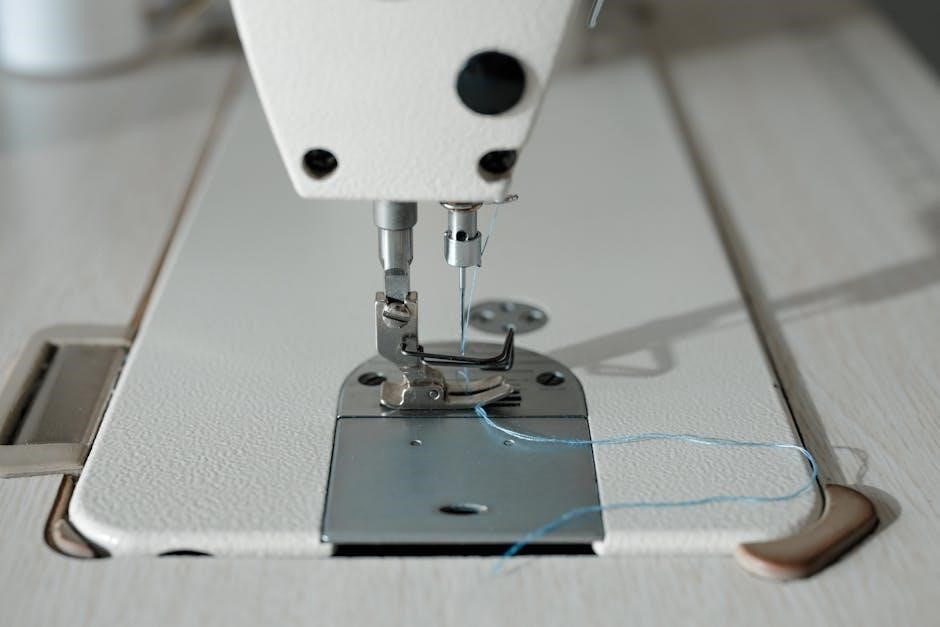
Proper bobbin winding is crucial for consistent stitch quality on your Singer Heavy Duty 4423. Begin by placing the thread spool on the spool pin. Guide the thread through the thread guides, ensuring it’s properly seated. Next, thread the end of the thread through the tension disc and then onto the bobbin.
Place the bobbin onto the bobbin winder spindle and push it to the right to engage. Start the machine by gently pressing the foot pedal. The bobbin will begin to wind automatically.
Monitor the winding process; the machine will stop when full. Remove the bobbin and trim the thread.
Basic Sewing Operations
Mastering basic operations unlocks the Singer 4423’s potential. Begin with threading the machine correctly, following the numbered diagram in your manual. Ensure the thread is securely seated in the tension discs and through the needle clamp. Proper threading prevents skipped stitches and ensures smooth operation.
Next, familiarize yourself with stitch selection. The 4423 offers a variety of stitch patterns, chosen via the stitch selection dial. Experiment with different stitches on scrap fabric to understand their applications.
Finally, practice straight stitching, backstitching, and zigzag stitching. These form the foundation for most sewing projects.
Threading the Needle
Correct needle threading is crucial for successful sewing with the Singer 4423. Begin by raising the needle to its highest position using the handwheel. Engage the presser foot, as this opens the tension discs, allowing the thread to seat properly.
Follow the numbered threading path illustrated in your manual. Guide the thread through the spool pin, tension discs, take-up lever, and finally, the needle clamp. Ensure the thread is fully inserted into the needle’s eye from front to back.
A threader can assist if needed. Always use a needle appropriate for your fabric type and thread weight.
Selecting Stitch Patterns
The Singer 4423 offers a variety of stitch patterns for diverse sewing projects. Locate the stitch selection dial on the machine’s front panel. This dial allows you to choose from a range of stitches, including straight, zigzag, and decorative options.
Refer to the stitch guide printed on the machine or within the manual to understand each stitch’s purpose and recommended settings. Rotate the dial to align your desired stitch number with the indicator mark.
Experiment with different stitches on scrap fabric to familiarize yourself with their appearance and suitability for various fabrics and applications.
Advanced Sewing Techniques
Mastering the Singer 4423 extends beyond basic sewing. Explore adjusting stitch length and width using the corresponding dials, enabling customization for different fabrics and desired aesthetics. Experimentation is key to achieving professional results.
Unlock further versatility by utilizing optional presser feet, sold separately. These feet cater to specialized tasks like zipper insertion, buttonholes, and quilting. Consult the manual for compatibility and proper installation.
Consider techniques like free-motion quilting, requiring a darning foot and dropped feed dogs, allowing for intricate designs. Practice and patience are crucial for refining these advanced skills.

Adjusting Stitch Length and Width
The Singer 4423 allows precise control over stitch parameters. Locate the stitch length dial, typically marked with measurements, to modify the distance between stitches. Shorter lengths are ideal for delicate fabrics and increased durability, while longer lengths suit basting or thicker materials.
Similarly, the stitch width dial controls the zigzag pattern’s breadth. Narrow widths create a straight stitch, while wider settings produce broader zigzag stitches for decorative effects or stretch fabrics.
Always test adjustments on scrap fabric before sewing your project. Observe how changes impact the fabric’s appearance and structural integrity. Refer to the manual’s stitch guide for recommended settings based on fabric type and desired outcome.
Using Optional Presser Feet
The Singer 4423’s versatility expands with optional presser feet. A zipper foot facilitates close-stitch zipper application, while a buttonhole foot automates buttonhole creation. An overcast foot prevents fabric fraying, ideal for knit fabrics.
Furthermore, a rolled hem foot creates delicate, finished edges. A blind hem foot enables invisible hems, and a gathering foot simplifies fabric gathering. Each foot snaps onto the presser shank, ensuring a secure fit.
Consult the manual for specific foot compatibility and usage instructions. Proper foot selection enhances sewing precision and unlocks creative possibilities. Experiment with different feet to achieve professional-looking results on diverse projects.
Maintenance and Troubleshooting
Regular maintenance ensures optimal performance of your Singer 4423. Cleaning lint from the bobbin area and feed dogs prevents jams. Lubricate oil points as indicated in the manual to maintain smooth operation. Dust covers and exterior surfaces with a soft cloth.

Troubleshooting common issues is straightforward. Needle breakage often stems from incorrect threading or needle type. Thread jamming can be resolved by re-threading and cleaning the tension discs. Refer to the manual’s troubleshooting section for detailed solutions.
Consistent care extends the machine’s lifespan and minimizes disruptions. Always unplug the machine before performing any maintenance or repairs.
Cleaning the Machine
Regular cleaning is vital for maintaining your Singer 4423’s performance. Begin by unplugging the machine for safety. Use a brush to remove lint and dust from the bobbin area, feed dogs, and surrounding components. A small vacuum cleaner with a brush attachment can also be effective.
Pay close attention to areas where thread accumulates, as this can cause jams and malfunctions. Wipe down the exterior surfaces with a soft, dry cloth. Avoid using liquid cleaners, as they can damage the machine’s finish.
Consistent cleaning prevents buildup and ensures smooth operation, extending the life of your sewing machine.
Oil Points and Lubrication
Proper lubrication ensures the Singer 4423 operates smoothly and prevents wear. Locate the designated oil points – typically around the bobbin area, hook assembly, and motor. Use only sewing machine oil; other lubricants can cause damage.
Apply a small drop of oil to each point, and then operate the machine briefly to distribute the oil evenly. Avoid over-oiling, as excess oil can attract dust and lint. Wipe away any excess oil with a clean cloth.
Regular oiling, as part of your maintenance routine, will keep your machine running efficiently for years to come.
Troubleshooting Common Issues
Encountering problems? This section addresses frequent issues with the Singer 4423. Needle breaking often stems from incorrect needle size, improper threading, or forcing the fabric. Always use the correct needle for your material.
Thread jamming can occur due to improper threading, lint buildup, or a poorly wound bobbin. Re-thread the machine carefully, clean the bobbin area, and ensure the bobbin is wound evenly.
Consult the manual for detailed diagrams and solutions. If issues persist, consider professional servicing to maintain optimal performance and prevent further damage to your machine.
Needle Breaking Problems
Frequent needle breakage is a common concern with the Singer 4423. Incorrect needle size is a primary cause; ensure you’re using the appropriate needle for the fabric weight. Heavy fabrics require larger needles, while delicate fabrics need finer ones.
Improper threading can also lead to breakage. Verify the thread is correctly seated in the needle clamp and follows the threading path precisely. Forcing the fabric through the machine puts excessive strain on the needle, causing it to snap.
Bent or damaged needles should be replaced immediately. Regularly inspect your needle for any signs of wear or damage.
Thread Jamming Solutions
Thread jamming is frustrating, but often easily resolved. Re-thread the entire machine, from the spool to the needle, ensuring correct tension and proper path following. Clean the bobbin area thoroughly; lint and debris accumulate, causing friction and jams. Use a small brush or compressed air.
Check the bobbin winding – uneven winding can lead to issues. Ensure the bobbin is wound smoothly and consistently. Incorrect needle insertion or a bent needle can also cause jams; Replace damaged needles promptly.
Use quality thread; cheap thread frays easily and contributes to jamming. Finally, slow down your sewing speed, especially with thicker fabrics.
Specific Model Variations (4423, 4432, 5523)
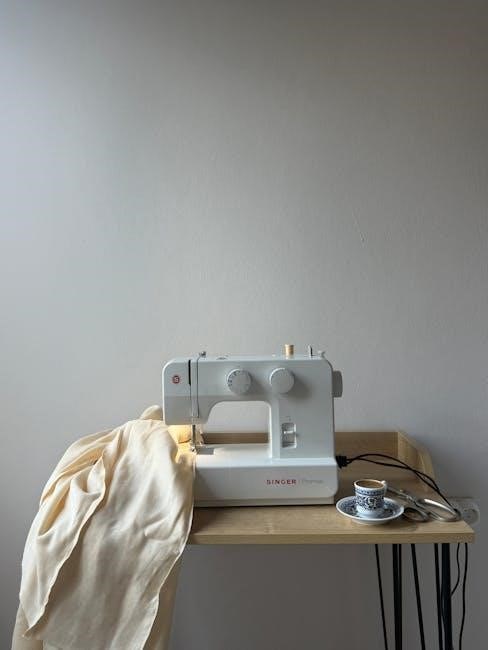
While sharing core functionality, the Singer 4423, 4432, and 5523 exhibit subtle differences. The 4423 Heavy Duty is a popular all-around model, known for its durability. The 4432 Heavy Duty often includes a slightly expanded stitch selection, catering to diverse projects. The 5523 Scholastic is frequently marketed towards students and beginners, offering a simplified experience.
Quick-Start Guides often cover all three models, highlighting common features. However, specific stitch patterns and accessory compatibility may vary. Refer to the individual manual for your exact model number to ensure accurate operation and optimal performance. Minor cosmetic differences may also exist.
Argos Product Support (460/2394)
If you purchased your Singer 4423 Heavy Duty Sewing Machine – Grey from Argos under product code 460/2394, specific support resources are available. Argos provides access to the instruction manual in PDF format directly related to this product version. This ensures you have the correct documentation for your machine’s configuration.
For assistance beyond the manual, contact Argos customer support, referencing the product code 460/2394. They can address queries regarding warranty, returns, or any issues specific to the Argos-supplied model. Online resources and FAQs may also be available on the Argos website. Remember to have your proof of purchase readily available when contacting support.
File Size and MIME Type Information
The Singer 4423 Heavy Duty Sewing Machine Instruction Manual, available for download, is a PDF document. Its file size is approximately 754 KB (Kilobytes). This relatively small file size ensures a quick and efficient download, even with moderate internet connection speeds. The MIME type associated with this file is “application/pdf”, which is the standard identifier for Portable Document Format files.
This MIME type allows web browsers and operating systems to correctly recognize and open the file using a compatible PDF reader, such as Adobe Acrobat Reader or a built-in browser plugin. Confirming the file size and MIME type can help verify the integrity of the downloaded manual and ensure it opens correctly on your device.
International Manual Availability (Italian, German)
Recognizing the global user base, Singer provides the 4423 Heavy Duty Sewing Machine manual in multiple languages. Beyond the standard English version, users can access translated manuals for Italian and German speakers. The Italian manual, for example, begins with a welcoming message – “La tua porta verso Lefficienza” – and emphasizes safety precautions for outdoor use.
Similarly, the German manual, starting with “Willkommen in einer neuen Welt,” introduces the machine and highlights important safety guidelines. These translated versions ensure accessibility and understanding for a wider audience, allowing users to confidently operate and maintain their sewing machine regardless of their primary language. Availability expands the usability of the Singer 4423 internationally.
Using the Machine with Specific Accessories
The Singer Heavy Duty 4423 is designed for versatility, enhanced by a range of optional presser feet. While the core manual details standard operation, understanding accessory usage unlocks advanced capabilities. These feet, sold separately, cater to specialized tasks like zipper insertion, buttonholes, and quilting.
The manual doesn’t extensively cover each accessory, but resources are available online demonstrating their proper attachment and function. Proper use of these accessories significantly expands the machine’s potential, allowing for more complex and professional sewing projects. Exploring these options, alongside the core manual’s guidance, maximizes the 4423’s performance.